
Concrete Patio vs Deck for Colorado Backyards
Grade decides this more often than taste does. Here is how a concrete patio and a deck compare on sloped ground, hail and UV exposure, maintenance frequency, repairs and resale, plus why many Front Range backyards end up with both.

Grade decides this more often than taste does. If the ground falls away from your back door, a deck gives you a level surface without importing fill or building a retaining structure. If the ground sits close to the door, a concrete patio is the simpler and more durable answer. Cost, maintenance and resale follow from that one structural fact.
That surprises homeowners who arrive expecting a style debate. After more than 20 years of flatwork across Castle Rock, Douglas County and the south Denver metro, CreteWorx has watched plenty of backyards answer this before anyone opened a catalog. Here is the honest comparison, including where a deck wins.
Grade and Threshold Decide Most Cases
A patio is a slab on grade and a deck is a framed structure that spans air. That is not cosmetic, it is the whole decision. A slab needs ground reasonably close to the finished elevation you want. A deck does not care what the dirt below it is doing.
When the ground drops away from the house
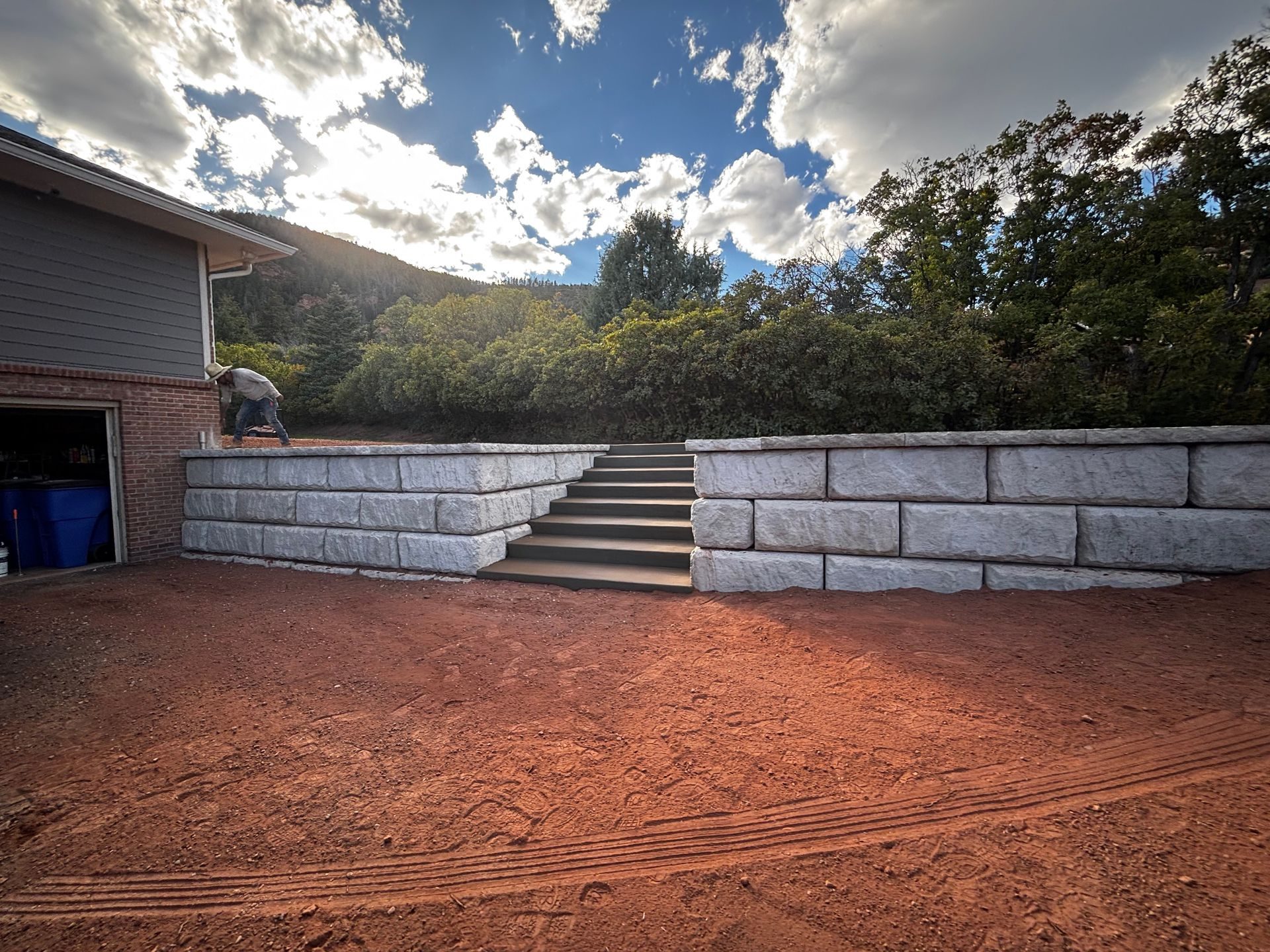
On a yard that steps down behind the house, getting a slab to the elevation you want means importing fill and holding it in place, or building a retaining structure. Both add real scope, and a deck frame avoids all of it. That is why sloped Front Range lots so often end up with one, and why a walkout off a raised main floor cannot be served by a slab at all.
Why the door threshold constrains a patio
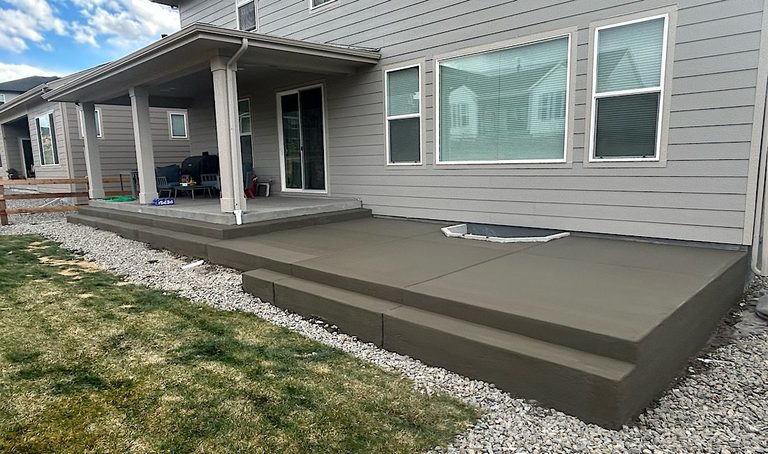
A patio has to sit low enough below the door that water sheds away from the house, which caps how high the finished surface can be. It is the first number we check. If existing grade already sits at or above that height, the project becomes an excavation and drainage job before it becomes a pour.
Decks have more latitude. Framing can meet the threshold almost exactly, so a deck reads as a continuation of the floor inside, where a patio reads as a step down.
Concrete Patio vs Deck at a Glance
These are the factors that actually move the decision. Cost appears as what drives it, not as a figure, because scope decides the number.
| Factor | Concrete patio | Wood or composite deck |
| Install on sloped ground | Needs fill or a retaining structure | Handles a dropping grade directly on piers |
| Service life expectation | Decades with proper installation and upkeep | Considerably shorter before major component replacement |
| Maintenance frequency | Lower: sealing and joint care | Higher: a refinishing cycle plus structural inspection |
| Hail and UV resistance | Hail does essentially nothing, altitude UV does not degrade it | Hail dents and splinters boards, UV fades and weathers them |
| Repair character | Patched or resurfaced, harder to hide | Boards and fasteners swap out easily, but repairs recur more |
| Feel underfoot in summer | Holds heat, warmer barefoot in full sun | Cooler, though dark composite gets hot |
| Heavy feature support | Carries kitchens, fire features, heavy furniture, no span limits | Frame must be sized for the load, some features impractical |
| Relative cost driver | Site work: excavation, fill, base prep, drainage | Structure: framing, footings, railing, decking |
Colorado Exposure Is Where Concrete Pulls Ahead
Front Range weather treats these materials very differently, which is the strongest argument for a slab once grade is not deciding it. Our overview of how Denver's climate affects concrete covers the mechanics.
Altitude UV and hail
Sunlight at altitude carries more ultraviolet energy than at sea level, and it shows. Wood dries, checks and greys faster. Composite holds up better but still fades, rarely evenly across a partly shaded surface. A slab is not affected that way, and a sealed decorative finish holds its appearance for years.
Hail is the blunter version of the same point. A storm that leaves decking dented and in places splintered does essentially nothing to a slab. Homeowners who have replaced boards weigh that heavily.
Freeze-thaw and the de-icer problem
Freeze-thaw cycling with big daily swings works on everything outdoors, but it attacks each material in a different place. On a deck it loosens fasteners, opens board ends and drives the rot and checking that takes out framing. On concrete the vulnerability is surface scaling, and de-icing salt is the fastest way to cause it. Neither is immune: concrete fails slowly at the surface, wood fails through the structure.
Non-combustible surfaces in wildfire-adjacent areas
In some Front Range neighborhoods, particularly those near open space and foothill terrain, homeowners weigh whether surfaces right around the house are combustible. A slab is not. How much that matters depends on where you live and what your insurer says, so treat it as one factor and confirm anything resembling a requirement with the Town of Castle Rock Building Division or Douglas County.
Maintenance, Honestly on Both Sides
Concrete asks for less frequent attention than a deck, but not for none. The difference is rhythm, not whether there is work.
What a deck asks of you
- Regular cleaning, since debris between boards starts rot
- Sanding and re-staining or re-sealing on a cycle, the real commitment
- Fastener checks, since seasonal movement backs screws out
- Inspection of framing, ledger connections and footings, which matters most and is checked least
Composite shortens that list but does not delete it: it still needs cleaning, it fades, it scratches, and the frame beneath is still wood.
What a slab asks of you
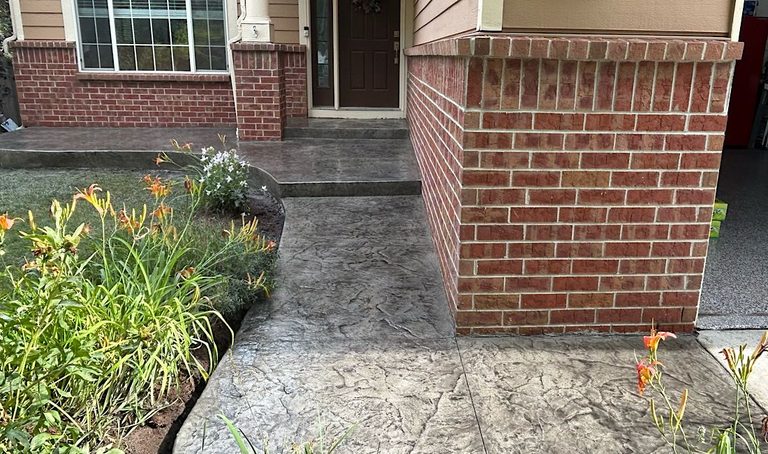
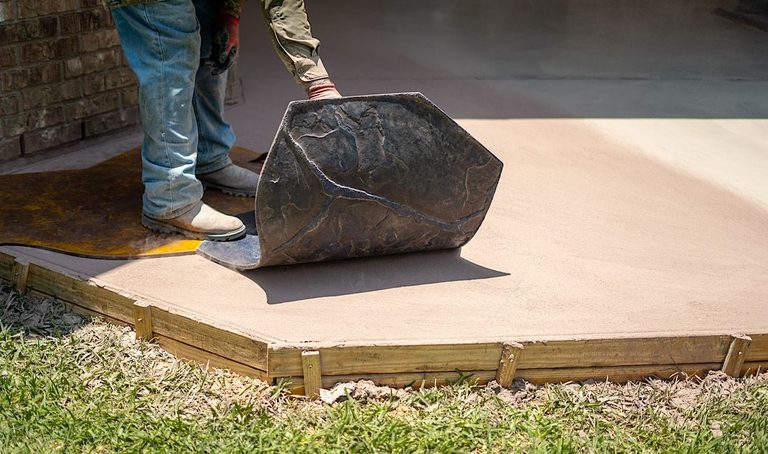
- Periodic sealing, more often on decorative and stamped finishes
- Joint maintenance, so control joints and expansion material keep working
- De-icer discipline in winter, meaning sand or mechanical removal, not chemicals
- Keeping water moving away from slab edges during spring snowmelt
Our guide to patio maintenance for long-term durability covers the sealing and joint schedule.
Repairs differ in kind, not just frequency
A deck board is a replaceable part. Pull it, fit a new one, and with weathering it blends. A cracked or scaled slab is patched or resurfaced, which is harder to hide because you are matching color and texture that aged in place. Expansive claystone soils along the Front Range contribute to slab cracking, which is why base prep and jointing matter. The trade: deck failures are easier to fix but recur, concrete failures are rarer but less forgiving.
How Long Each One Lasts
A properly installed and maintained concrete patio has a service life measured in decades, while a wood deck's is considerably shorter before major components need replacing, with composite between the two. Treat those as general expectations, not fixed numbers, because construction quality, exposure and upkeep move them substantially. That cuts against concrete too: thickness, base prep, reinforcement, jointing and drainage all shape how long concrete lasts before replacement.
What Each One Is Genuinely Better At
A deck is the better answer when
- The grade drops away, or the door sits above the yard
- You need second-story or walkout access
- Mature tree roots should stay undisturbed, since piers work around them
- You want a faster install with less site disruption
- Barefoot comfort on hot afternoons is a priority
- Utilities or irrigation must run beneath the surface and stay reachable
A concrete patio is the better answer when
- The yard already sits close to the elevation you want and ground-level living is the goal
- Hail and altitude UV are exposures you would rather design out
- You want the lowest maintenance frequency available outdoors
- Heavy furniture, a fire feature or an outdoor kitchen is in the plan
- You would rather have no structure to inspect
- The surface should read as one material with walkways and the driveway
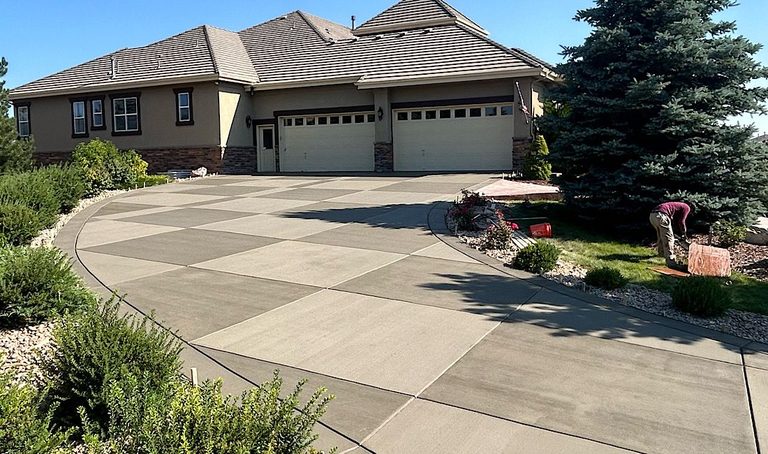
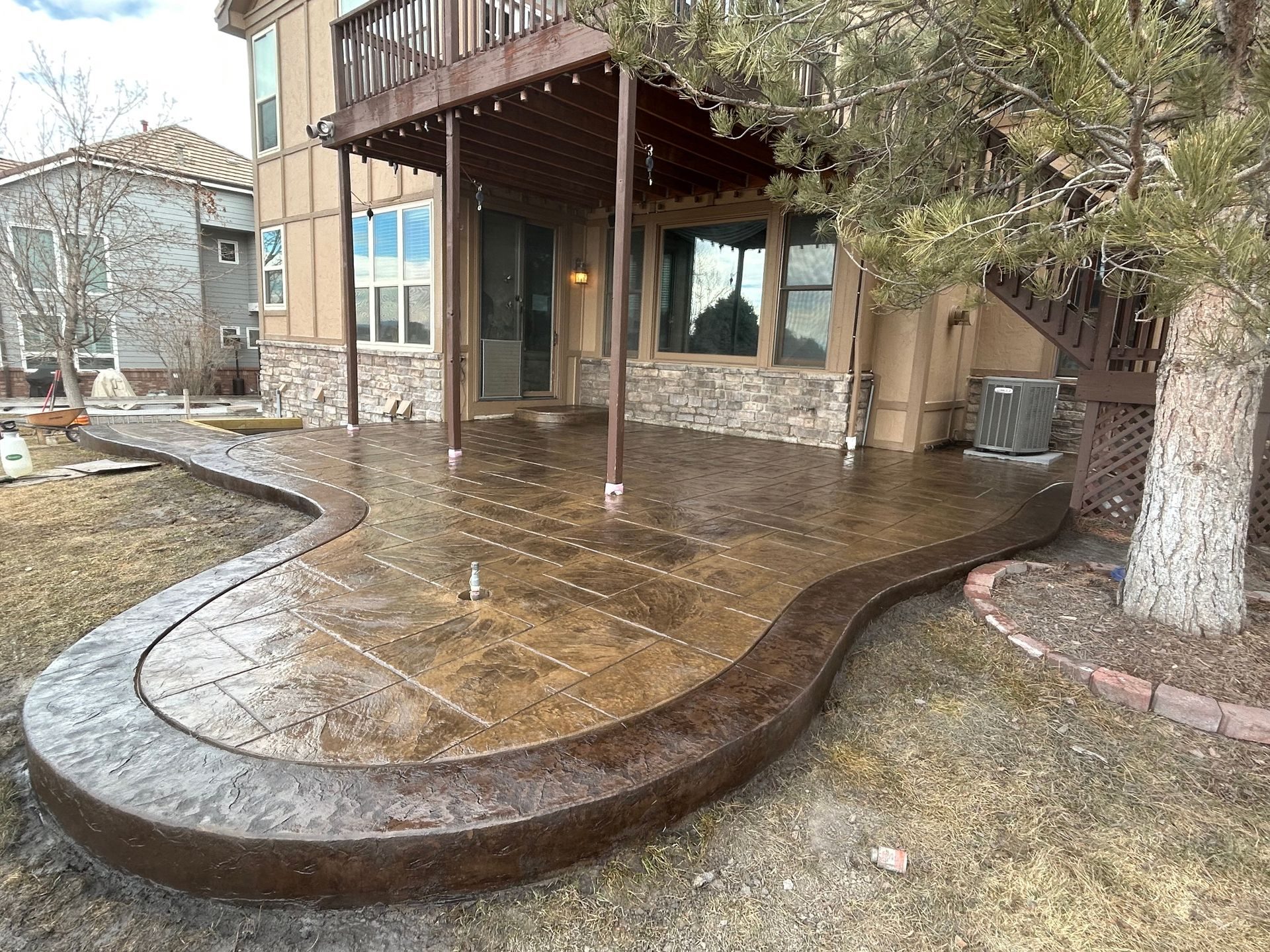
That last point is underrated. A slab that flows into a walkway and ties back to the driveway makes a yard feel designed rather than assembled, which is why our concrete patio work often grows to include connecting hardscape. If you are weighing finishes rather than structure, start with our beginner's guide to choosing the right patio design.
Resale Value, Without the Invented Numbers
Both are generally seen as desirable outdoor living features, and condition matters more to most buyers than material does. We will not quote a return-on-investment percentage, because a well-maintained example of either beats a neglected one of the other.
One asymmetry is worth knowing. A deck in visible disrepair reads as deferred maintenance and raises questions about structure a buyer cannot see. A weathered slab reads as a surface needing cleaning and sealing. Both are fixable, but one implies a bigger unknown, which is part of the case for treating a concrete patio as a long-term investment.
The Hybrid Answer Most Backyards Actually Want
Many Front Range backyards end up with both, and treating this as a strict either-or is often the real mistake. A patio at the door where grade allows, plus a deck where the yard falls away, solves the whole yard instead of forcing one material into a job it suits poorly. Three patterns recur:
- A deck off a raised main-floor door, with stairs to a patio at natural grade
- A patio at a ground-level walkout, with a deck further out where the lot drops
- A patio for the heavy items, kitchen, fire feature and dining table, with a smaller deck as shaded seating
Splitting a yard this way splits the maintenance burden sensibly. The surfaces taking the most furniture and weather are concrete, and the deck stays small enough to refinish in a weekend.
Why Winter Is the Right Time to Plan This
We do not pour concrete during the winter season, and this publishes in planning season on purpose. Pouring resumes when conditions allow, so the next few months are the right window to walk the yard, shoot elevations and get on the spring schedule.
Frequently Asked Questions
Is a concrete patio or a deck cheaper?
It depends almost entirely on grade. On ground already close to the elevation you want, a patio is usually more economical because site work is modest. On a yard that drops away, the fill or retaining structure a slab needs can swing it and make a deck cheaper. Patio pricing is covered in our dedicated patio cost guide.
Is a concrete patio cheaper than a deck in the long run?
Usually yes, once maintenance and replacement are counted. A slab needs sealing and joint care but no refinishing cycle, and its service life is measured in decades. A deck's cleaning, refinishing and eventual board and framing work accumulates. The caveat: a slab on poor base in a badly drained spot needs attention early, so the advantage assumes correct installation.
How does deck versus patio maintenance compare in Colorado?
Concrete asks for less frequent work: periodic sealing, clear control joints, no chemical de-icers. A deck asks for more: cleaning, sanding and re-staining on a cycle, plus fastener and framing inspection, all accelerated by altitude UV and freeze-thaw movement. Composite reduces refinishing without eliminating cleaning, fading or frame inspection.
Does a patio or a deck add more resale value?
Condition matters more than material to most buyers. Both are considered desirable outdoor living features, and a well-maintained example of either outperforms a neglected one of the other. The difference is how neglect reads: visible deck disrepair suggests hidden structural problems, a weathered slab suggests cleaning and sealing.
What is the lifespan of a concrete patio versus a wood deck?
A concrete patio installed and maintained properly has a service life measured in decades, and a wood deck's is considerably shorter before major components need replacement, with composite in between. These are general expectations, not fixed numbers, and construction quality, drainage, exposure and upkeep shift them.
Can you build a patio on a sloped yard?
Yes, but it requires a level pad: importing and compacting fill, cutting into the slope, or building a retaining structure. All three add scope compared with flat ground. On a steep or long drop, a deck often reaches the same usable space with less site work, and that is where the comparison tips. Measurements settle it, not a photo.
Measure the Drop Before You Pick a Material
Most of this answers itself once someone stands in the yard with a level and a tape and measures how far the ground falls from the door threshold to the far edge of the surface you want. We will take that measurement, check drainage and access, and say honestly whether your backyard wants a slab, a deck, or both, including when we would point you to a deck builder. Winter is the time to settle it and hold a spring date, so contact CreteWorx in Castle Rock, Douglas County and the south Denver metro.
Written by CreteWorx · Castle Rock, CO


