
Building Retaining Walls Through a Colorado Winter
Dry-stacked block walls have no cure window, so the calendar rule people apply to all concrete work does not apply to them. What cold weather genuinely stops, what is easier in the off season, and when waiting until spring is right.

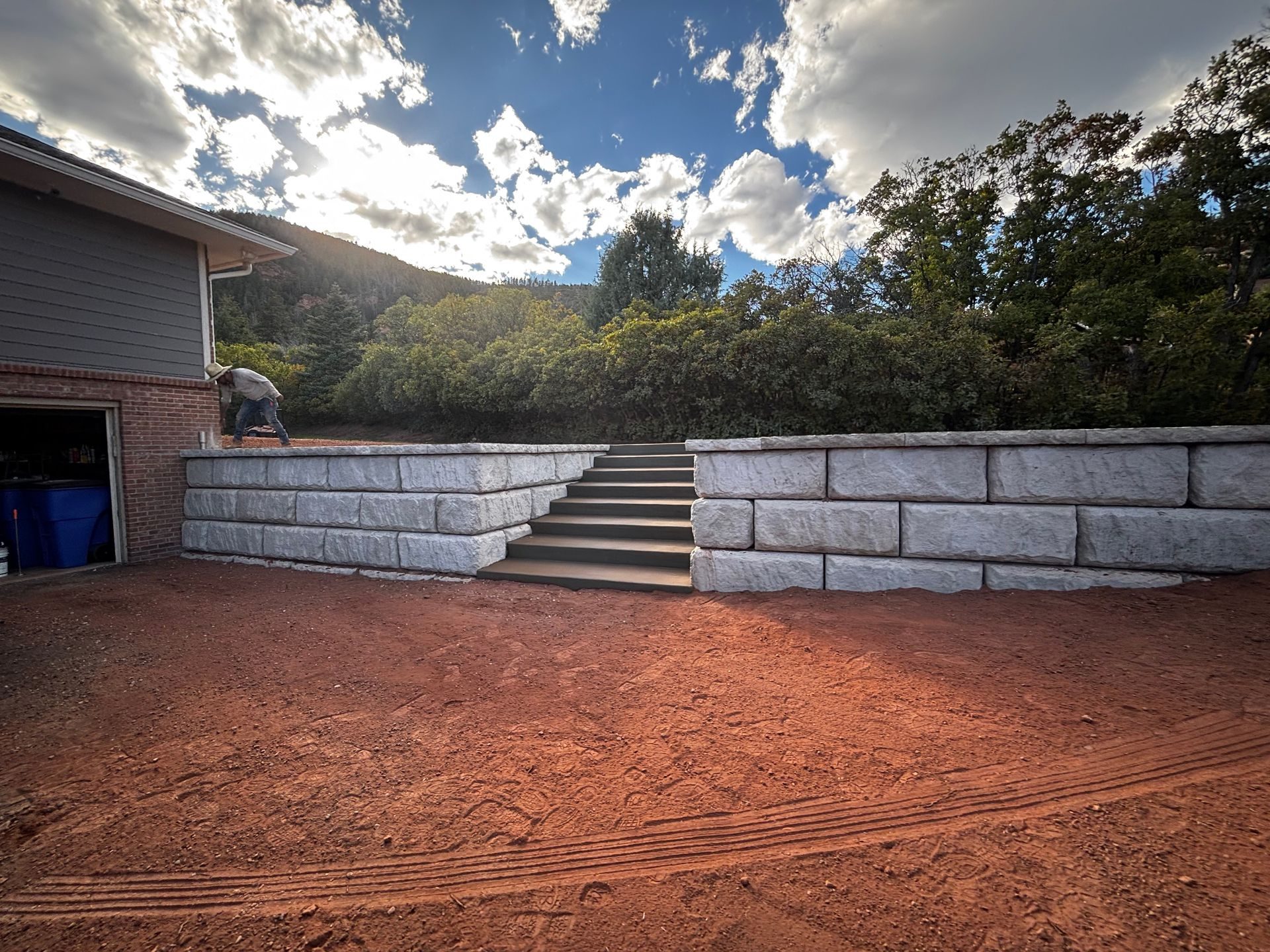
Yes, a retaining wall can be built in winter along the Front Range, with one hard split: dry-stacked segmental block and dry-set stone go up in cold weather, poured concrete walls do not. The limiting factor is not air temperature. It is frozen ground. CreteWorx builds a high volume of block walls between November and February, and turns away winter pours.
Almost everything a homeowner believes about cold weather and concrete is true. Almost none of it applies to a wall with no concrete placed on site.
Spring Is the Better Season to Plan a Replacement. It Is Not the Only Season to Build One.
Spring has real advantages for deciding whether a wall needs replacing: the ground is open, snowmelt has just loaded the wall and shown what it does under pressure, and movement that hid under snow is visible. That is why our guide to the best time to replace a retaining wall in Colorado points at spring for assessment and scheduling.
This page answers a narrower question: whether cold-season construction is viable once that decision is made. Conflating the two is why homeowners sit on a failing wall for five months. The calendar constraint people assume covers all concrete work comes from cure windows, and a dry-stacked wall has none.
Why No Cure Window Changes the Calendar
A dry-stacked segmental block wall has no mortar and no pour, so nothing on site cures. The units arrive cured from the plant. There is no minimum placement temperature to wait for and no strength gain to monitor before the wall carries load.
Strip curing out and the work is this: excavation, a compacted leveling pad, a buried course, units stacked to the designed batter, geogrid where the design calls for it, free-draining aggregate with geotextile separation and a drain pipe daylighting to an outlet, then backfill in compacted lifts. None of it is temperature-dependent the way a pour is, and boulder and dry-set stone walls sit in the same category.
Poured walls are the opposite case, said plainly. A poured wall needs a footing and stem wall that have to cure, and cold placement requires protection measures: insulated blankets, heated enclosures, and a longer schedule before backfill. CreteWorx does not pour concrete during the winter season, so a poured wall is a spring conversation. The tradeoffs are covered in our comparison of block and poured concrete retaining walls.
What Can and Cannot Be Built in Cold Weather
Most of a block wall is workable, and the items that are not come off the end of the schedule rather than stopping the job.
| Work item | Cold season feasibility | Why |
| Dry-stacked segmental block wall | Workable in weather windows | No mortar and no pour, so no cure window. The limit is subgrade condition, not the thermometer. |
| Boulder or dry-set stone wall | Workable in weather windows | Units are set, not placed wet. Nothing gains strength on site. |
| Excavation and leveling pad | Workable while the ground is open, stops on frozen subgrade | Base must be compacted on unfrozen soil to read true. |
| Free-draining aggregate and drain pipe | Workable with clean, ice-free stone | Ice in the aggregate compacts to a density that disappears when it thaws. |
| Geogrid placement | Workable | Laid, tensioned and covered between courses. Nothing temperature sensitive. |
| Backfill in lifts | Workable with unfrozen soil at a reasonable moisture content | Saturated soil frozen in a lift will not compact, and it settles on thaw. |
| Poured footing and stem wall | Not scheduled during the winter season | Both cure on site, and cold placement needs protection and time. |
| Final grading and topsoil | Deferred to spring | Cannot be finished accurately over frozen or snowy ground. |
| Seeding, sod and planting | Deferred to spring | Nothing establishes in frozen soil. |
What Cold Genuinely Stops
Cold does not stop a block wall, but frozen ground and frozen material do. A crew that pretends otherwise is building a wall that will move.
Frozen Subgrade Cannot Be Properly Compacted
This is the limit that matters most. Compacting base aggregate over frozen subgrade gives a false reading: the passes feel solid and the grade comes out flat, because ice in the soil is doing the work soil structure should do. Then it thaws in March and consolidates under the wall.
A design calling for compaction against standard Proctor maximum dry density assumes unfrozen, moisture-conditioned subgrade, and no test taken on frozen ground means anything. Expansive claystone soils along the Front Range make it worse, since that material changes volume with moisture anyway.
Frozen or Ice-Laden Aggregate
Base and drainage stone carrying ice compacts to a density that evaporates later. Ice bulks the voids, the material locks up under the plate, and on thaw the water drains out, leaving voids exactly where the wall needs continuous support. Rained-on stockpiles that froze are the usual culprit.
Saturated Backfill That Freezes
Wet soil placed in a lift and frozen there does not achieve compaction, and it settles in spring. That is how a well-built wall ends up with a trench along the backfill zone in April, and how surcharge appears where the design never expected it. Backfill goes in at a workable moisture content or it does not go in.
Snow and Ice in the Drainage Zone
Anything that melts later leaves a void or a channel. Snow shoveled into an open excavation, ice on a partly placed aggregate column, or a skiff buried under the next lift all become water moving where you did not design for it. The drainage zone does the most work against hydrostatic pressure, and our breakdown of retaining wall drainage, gravel, fabric and drain pipe explains why a void there is structural rather than cosmetic. Excavations get covered, and snow comes out first.
A Hard, Prolonged Freeze Simply Stops the Work
When frost drives deep and stays, the job pauses. There is no technique around it. Cold-season wall building is opportunistic rather than continuous: crews work the windows the weather gives them, and a stretch of single-digit days means the site sits. Anyone promising otherwise is selling a schedule nobody can hold.
What Is Actually Easier in the Cold Season
Several things about cold-season wall work are genuinely better than spring, and this is the part homeowners never hear.
- There are more workable days than people assume. Front Range frost penetration is typically shallow early in the season, and the ground often thaws back through sunny stretches, leaving more workable days between November and February than the calendar suggests. Conditions vary year to year, so treat that as typical rather than guaranteed.
- Dry, frozen ground carries equipment better than spring mud. A machine run across a saturated May lawn ruts it to the subsoil. Firm winter ground takes the same traffic with far less damage.
- Dormant landscaping tolerates disturbance. Plants are not growing, so beds and sod that would be set back badly in May recover when they break dormancy.
- Scheduling is open. The spring and summer hardscape queue across the south Denver metro is long. The shoulder season is not, which means realistic start dates.
- The wall is standing before snowmelt. Spring melt is the heaviest annual loading a retaining wall sees here, and it is what the drainage system was designed for. A wall completed in January meets that load finished. A failing wall left through winter meets it at its worst.
The freeze-thaw cycling and daily temperature swings in our overview of Denver's climate and your concrete work on a compromised wall all winter, and on the retained soil behind it.
What a Cold-Season Project Actually Looks Like
Expect a weather-dependent schedule and a scope that explicitly ends before final landscaping. Demolition and excavation go in during a thaw window, base and the buried course while the subgrade is open, then courses, geogrid, aggregate and backfill in stages. A mid-project pause during a hard freeze is normal rather than a sign something went wrong.
What Belongs in the Scope in Writing
Get these four on paper before work starts. The questions in our guide on what to expect when hiring a concrete contractor apply directly.
- A weather-dependent start date, stated as such, with what triggers a pause and how it is communicated.
- An explicit commitment that no base or backfill goes on frozen subgrade or uses frozen material, and that the crew stops instead.
- Final grading, topsoil and any seeding or sod listed as a spring return. Normal practice, not an omission.
- Site protection and access planning for a frozen or snowy approach: where the machine stages, what gets covered overnight, how material stays ice free.
Jurisdiction-specific items belong in writing too. Height triggers, engineering requirements, setbacks and permit thresholds vary, so confirm what applies with the Town of Castle Rock Building Division or Douglas County, and let an engineer confirm the section, reinforcement and drainage where a design requires it.
When Waiting Until Spring Is the Right Answer
Sometimes it is. If the wall is cosmetically tired but structurally stable, if your site is a north-facing slope that holds frost all winter, if the design calls for a poured wall, or if the scope hinges on spring landscaping, waiting costs you nothing.
The case for not waiting is narrower. A wall already leaning, bulging or shedding units does not improve over a winter. Saturated retained soil, freeze-thaw cycling and spring melt act on it while it sits, and the mechanism that drives freeze-thaw damage in driveways works on the soil mass behind it.
Waiting is a judgement call that depends on how far gone the wall is, and that judgement needs eyes on the wall. A photograph does not show whether units have rotated or whether the drainage outlet still daylights.
Frequently Asked Questions
Can You Build a Retaining Wall in Winter?
Yes, if it is a dry-stacked block or dry-set stone wall. There is no mortar and no pour, so nothing cures and there is no minimum placement temperature. The constraint is frozen subgrade and frozen material, not cold air, so work happens in weather windows and can pause in a hard freeze.
How Does a Block Retaining Wall Cold Weather Install Differ From a Spring One?
The construction is identical: same leveling pad, buried course, batter, geogrid, free-draining aggregate and drain pipe. What differs is the schedule and where the scope ends: start dates follow the forecast, a pause is possible, and final grading, topsoil and seeding are deferred to spring.
Is Frozen Ground Retaining Wall Excavation Possible?
Excavating through shallow frost is usually possible with the right equipment. Excavating is not the problem. Compacting is. Base has to go on unfrozen subgrade, because compaction over frozen soil reads as solid and then consolidates on thaw. The real question is whether the soil at the bottom of the cut is workable.
Will a Retaining Wall Built in Winter Settle in Spring?
Not if it was built correctly, because it sits on compacted base over unfrozen subgrade and is backfilled with unfrozen material in compacted lifts. Spring settlement is the signature failure of a wall built on frozen ground or backfilled with frozen or saturated soil. That is why the no-frozen-subgrade commitment belongs in your written scope.
Do You Pour Concrete in Winter?
No. CreteWorx does not pour concrete during the winter season. Cold placement requires protection measures such as insulated blankets and heated enclosures plus an extended schedule, and we would rather pour in spring than place concrete under conditions that compromise it. What gets built instead is dry-stacked segmental block, boulder and dry-set stone, none of which involve a pour.
Is an Off Season Retaining Wall Project in Castle Rock Worth Scheduling?
For a failing block wall, often yes. You get open scheduling instead of a long spring queue, dormant landscaping that tolerates disturbance, firmer ground for equipment access, and a finished wall standing before snowmelt, the heaviest loading of the year. The tradeoff is a weather-dependent schedule and landscaping in spring.
Have Someone Look at the Wall Before the Melt
If your wall is leaning, bulging or shedding units and you have been told to wait until April, the first question is whether it is block or poured, because that decides whether waiting is necessary or just habit. A block wall can go up in a Colorado January and be backfilled before snowmelt. For eyes on the wall and a straight answer about whether yours should wait, request a free on-site estimate from CreteWorx in Castle Rock, Douglas County or the south Denver metro.
Written by CreteWorx · Castle Rock, CO


