Colorado winters can be especially demanding on concrete driveways. Throughout Castle Rock and the surrounding Front Range communities, concrete surfaces are exposed to snow accumulation, ice, freezing temperatures, moisture intrusion, and repeated freeze-thaw cycles for several months each year. While concrete is built for durability, winter weather can gradually contribute to cracking, surface deterioration, and long-term structural stress if proper maintenance is overlooked.
Many homeowners focus only on
snow removal during winter, but protecting a concrete driveway involves much more than clearing accumulation after a storm. Small cracks, drainage problems, worn sealers, and moisture buildup may all worsen significantly once temperatures begin fluctuating above and below freezing. What starts as minor cosmetic wear can eventually develop into larger structural problems if winter maintenance is neglected.
Creteworx regularly works with homeowners throughout Castle Rock, dealing with driveway deterioration caused by freeze-thaw damage, standing water, and long-term winter exposure. From firsthand experience in concrete repair and installation projects, preventative maintenance before and during winter often plays a major role in extending driveway lifespan while reducing costly repairs later.
According to the American Concrete Institute, freeze-thaw cycles are among the most significant environmental stresses concrete surfaces face in colder climates. Water that enters cracks, joints, or porous concrete areas expands as it freezes, placing internal pressure on the slab. Repeated expansion and contraction may gradually contribute to cracking, scaling, surface flaking, and joint deterioration over time.
Colorado’s climate creates especially challenging conditions because temperatures often shift rapidly during the winter months. Snow may melt partially during sunny afternoons before refreezing overnight, creating repeated stress on concrete surfaces and supporting soils beneath the slab.
Understanding
how to maintain a concrete driveway during winter can help homeowners reduce seasonal damage while preserving both appearance and structural performance.
The Four Most Important Winter Maintenance Tips for Concrete Driveways
1. Repair Cracks and Joint Damage Before Winter Worsens Them
One of the most important winter maintenance steps is addressing small cracks before moisture begins freezing inside them.
Concrete naturally develops minor movement over time due to:
- Temperature changes
- Soil shifting
- Expansion and contraction cycles
- Moisture fluctuations
Even small openings may allow water to penetrate beneath the surface. Once freezing temperatures arrive, trapped moisture expands and places additional pressure on the concrete.
From
practical contractor experience, untreated cracks are one of the leading causes of:
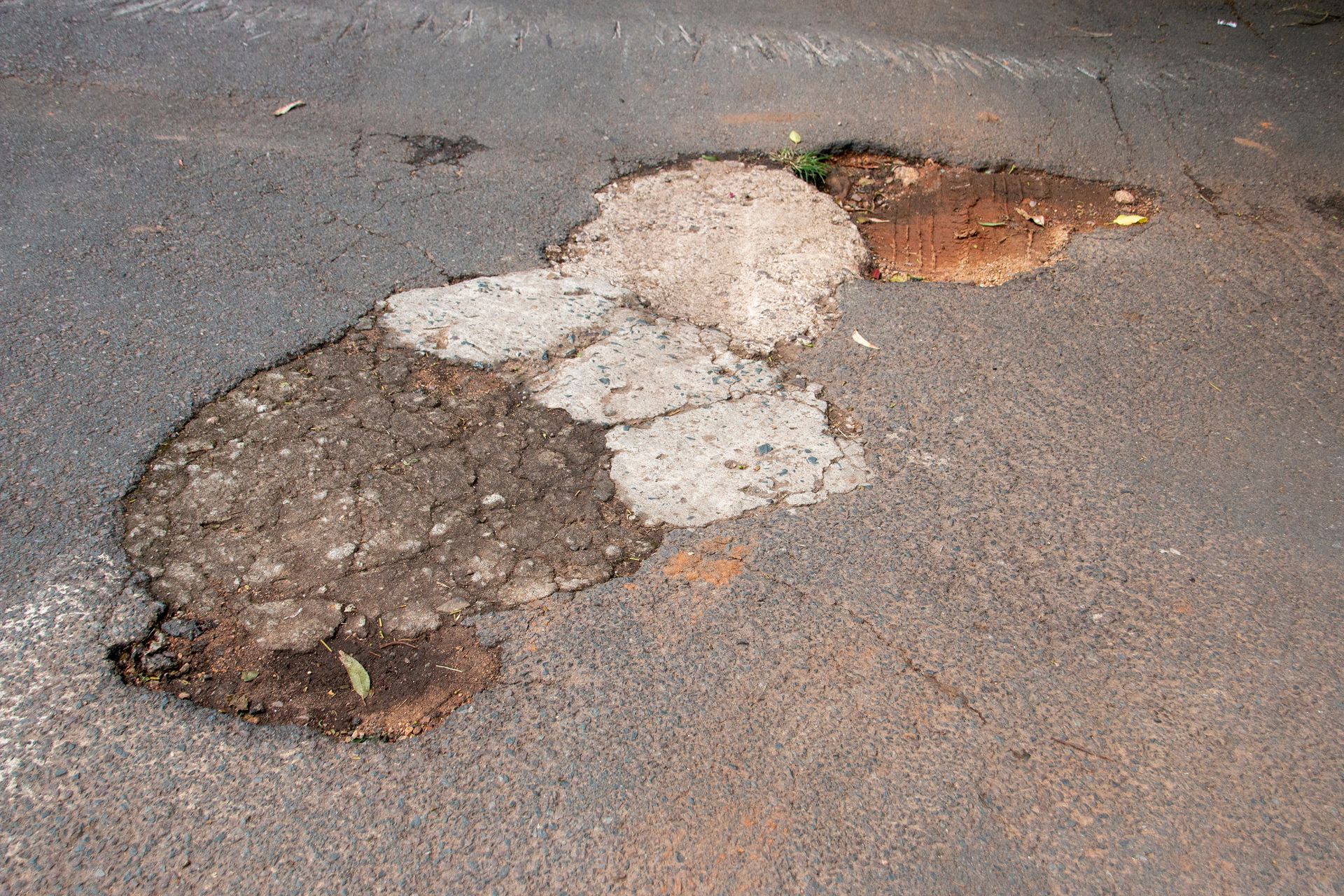
- Widening fractures
- Surface scaling
- Joint separation
- Freeze-thaw deterioration
- Moisture intrusion beneath the slab
Homeowners should inspect for:
- Hairline cracks
- Surface pitting
- Joint gaps
- Corner cracking
- Minor scaling areas
According to the Portland Cement Association, reducing moisture intrusion is critical for improving concrete durability during freeze-thaw conditions.
Addressing small maintenance concerns early often helps reduce larger structural repairs later.
2. Keep Snow, Ice, and Debris Under Control
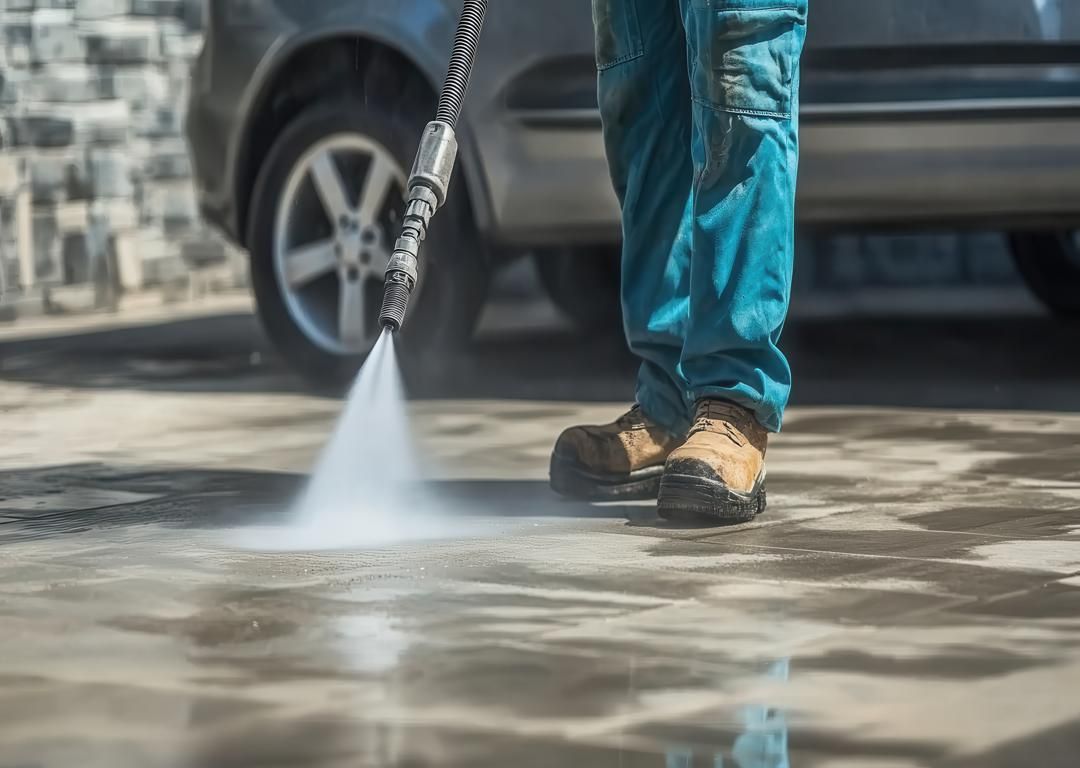
Routine cleaning and snow management are important throughout winter.
Leaves, dirt, and debris trapped against the driveway surface may hold moisture longer and increase freeze-thaw stress near vulnerable areas.
From firsthand maintenance experience, buildup around expansion joints and low spots often contributes to:
- Water retention
- Surface deterioration
- Ice formation
- Drainage blockages
Homeowners should regularly:
- Remove leaves and debris
- Clear snow promptly after storms
- Keep expansion joints clean
- Prevent standing water from lingering
Snow should ideally be removed before repeated melting and refreezing occur because ice buildup increases surface stress and creates additional slip hazards.
Homeowners should also use care when removing snow.
Aggressive scraping with metal shovels or snowplows may damage:
- Decorative finishes
- Surface sealers
- Aging concrete areas
- Expansion joints
Using proper snow removal techniques helps reduce unnecessary surface wear during the winter months.
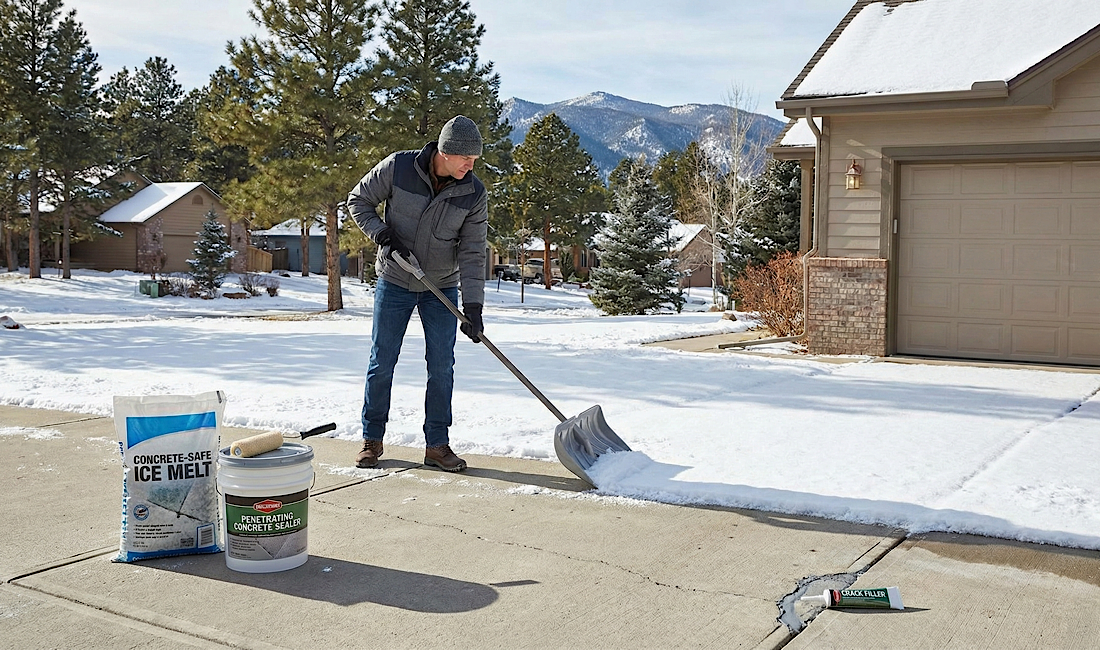
3. Use Deicing Products Carefully
One of the most common causes of winter surface deterioration is improper deicer use.
While deicing products help improve safety during icy conditions, some harsh chemicals may accelerate:
- Surface scaling
- Sealer breakdown
- Moisture penetration
- Freeze-thaw stress
From practical contractor observation, overuse of deicing salts often contributes to visible driveway wear over time, especially on older or unsealed concrete.
Homeowners should consider:
- Using deicers labeled safe for concrete
- Avoiding excessive chemical buildup
- Removing snow promptly before ice thickens
- Monitoring decorative concrete carefully during winter
According to the National Ready Mixed Concrete Association, proper maintenance and moisture control are important for minimizing winter-related concrete damage.
Driveways that already contain cracks or worn surfaces are often more vulnerable to deicing-related deterioration because moisture and chemicals can penetrate deeper into the slab.
Professional sealing before winter may help improve surface protection against snow, moisture, and chemical exposure.
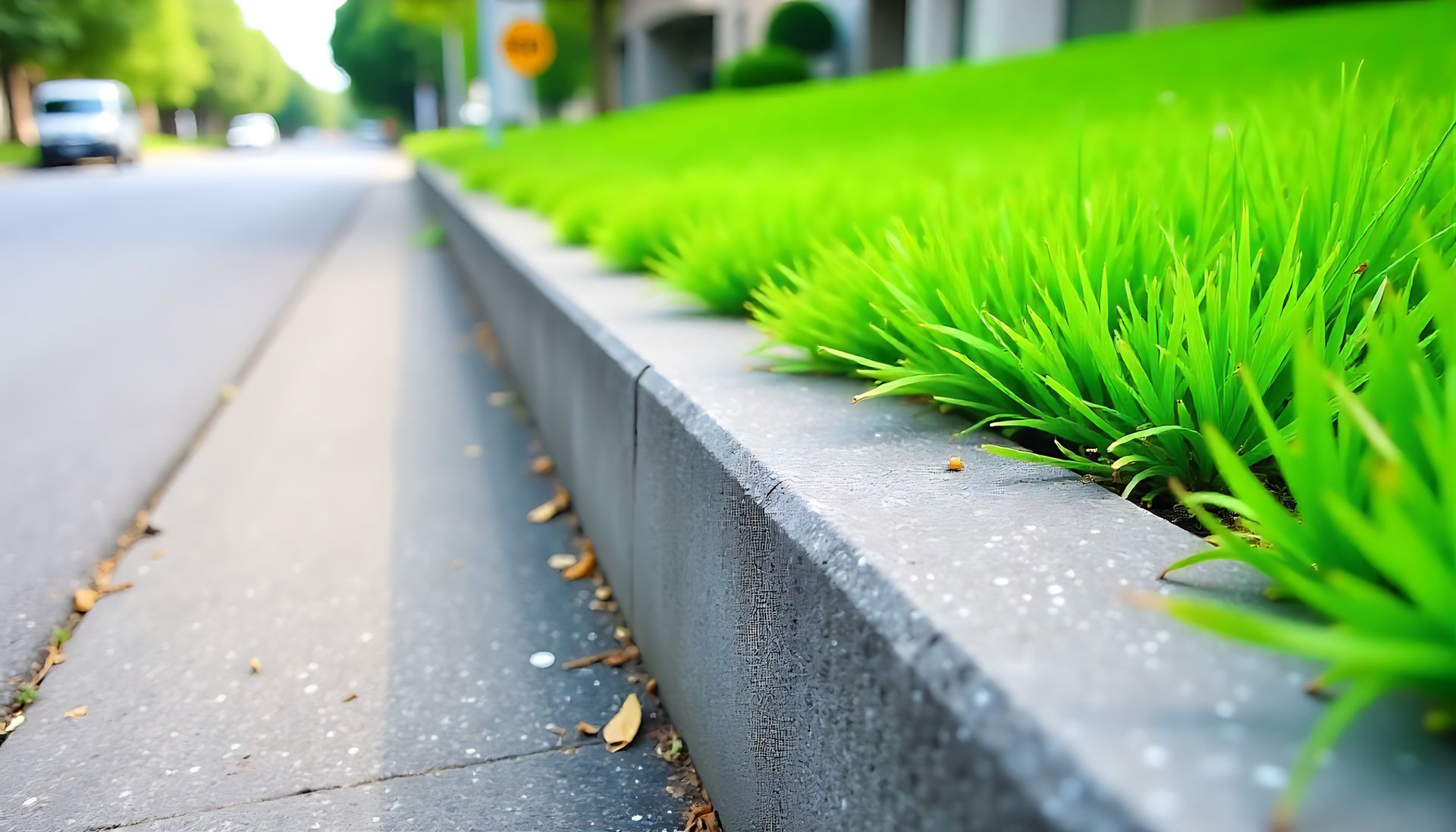
4. Monitor Drainage and Water Runoff Throughout Winter
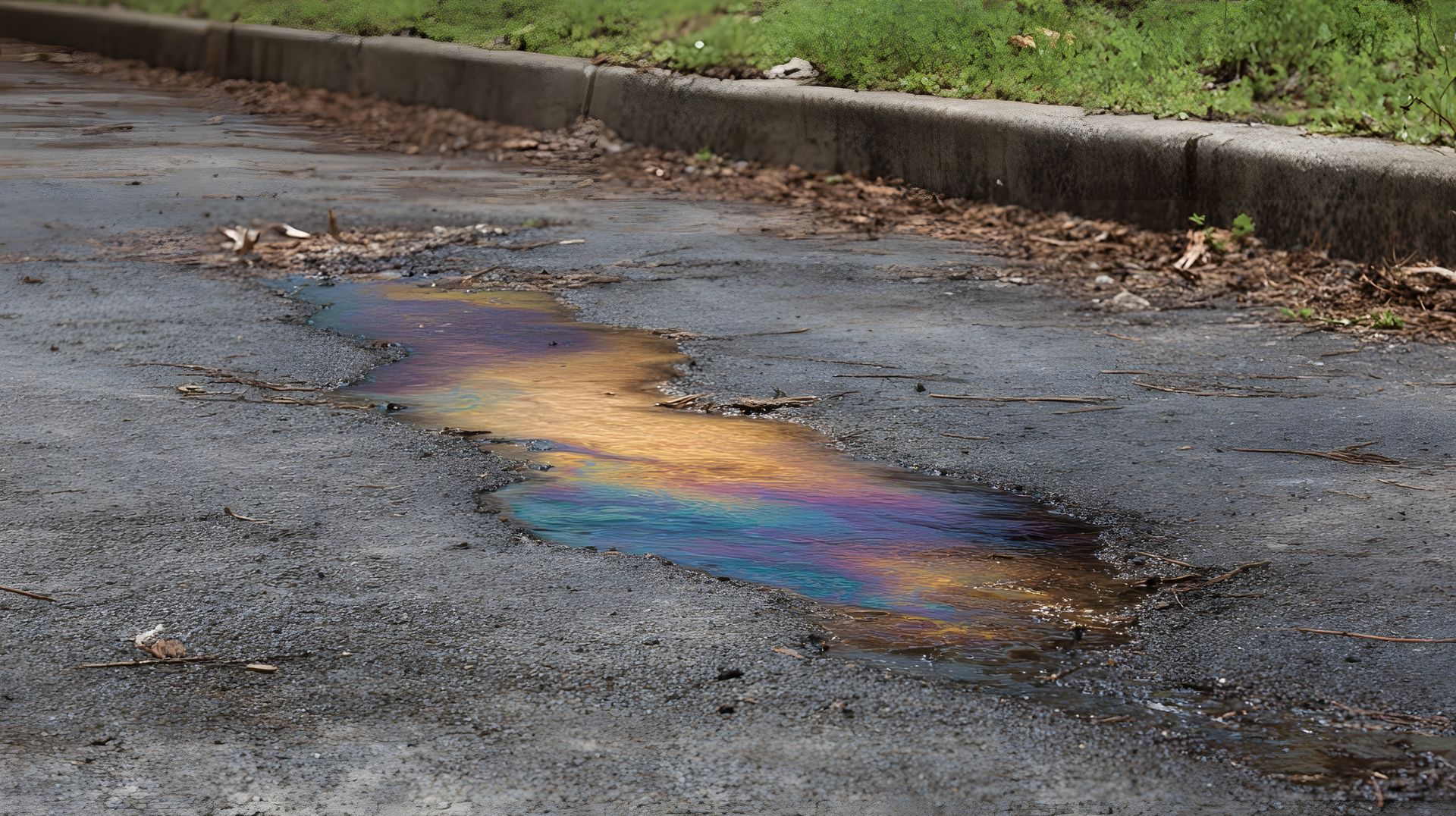
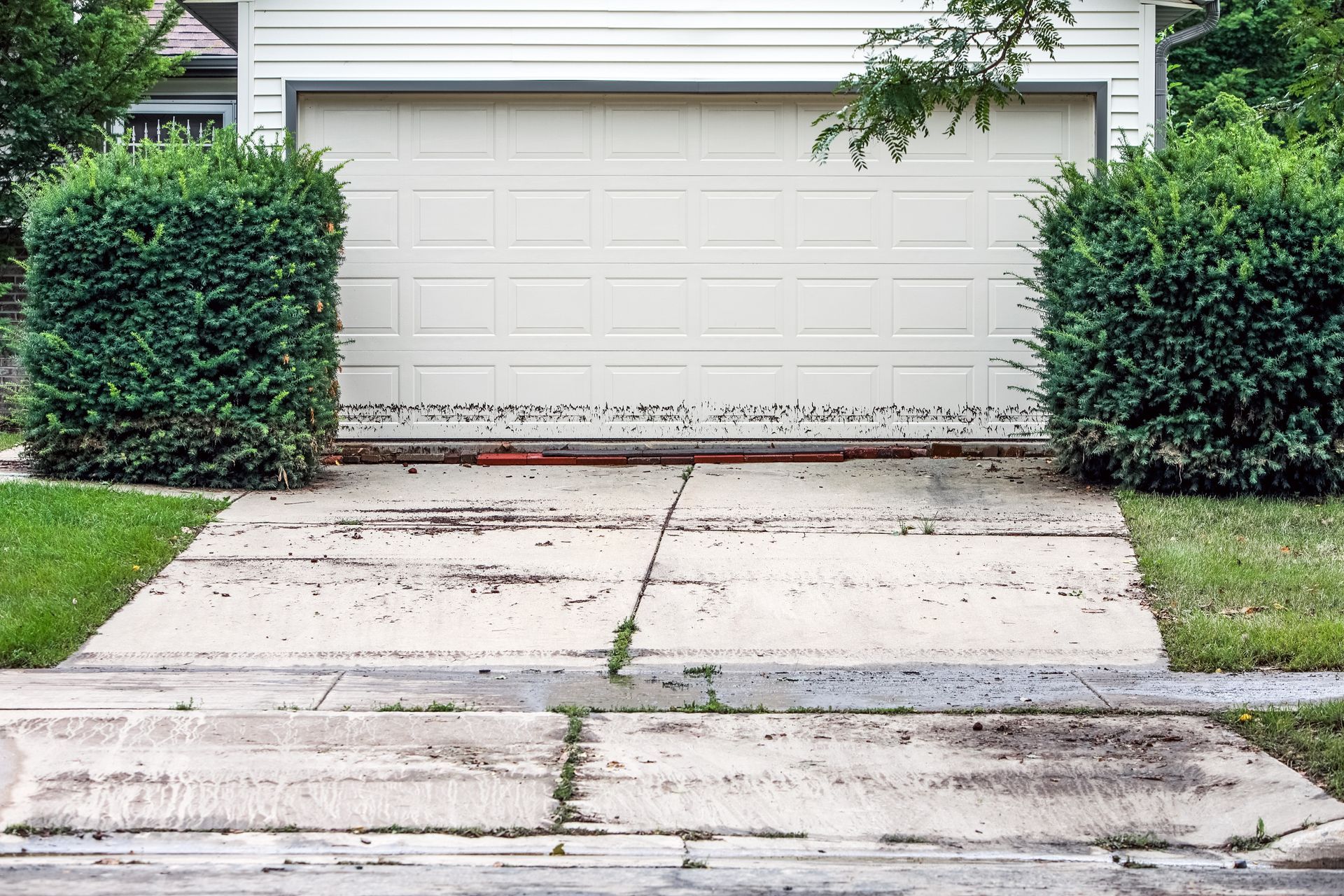
Drainage problems become even more important during winter because melting snow and ice create continuous moisture exposure around the driveway.
From firsthand installation and repair experience, poor drainage commonly contributes to:
- Standing water
- Ice buildup
- Soil erosion beneath the slab
- Joint deterioration
- Uneven slab movement
Homeowners should monitor for:
- Water pooling after snowmelt
- Ice forming in low areas
- Downspouts draining near the driveway
- Erosion along slab edges
- Cracking concentrated near wet areas
Colorado’s repeated freeze-thaw cycles may rapidly worsen existing drainage concerns if water continues collecting around the driveway.
Potential improvements may include:
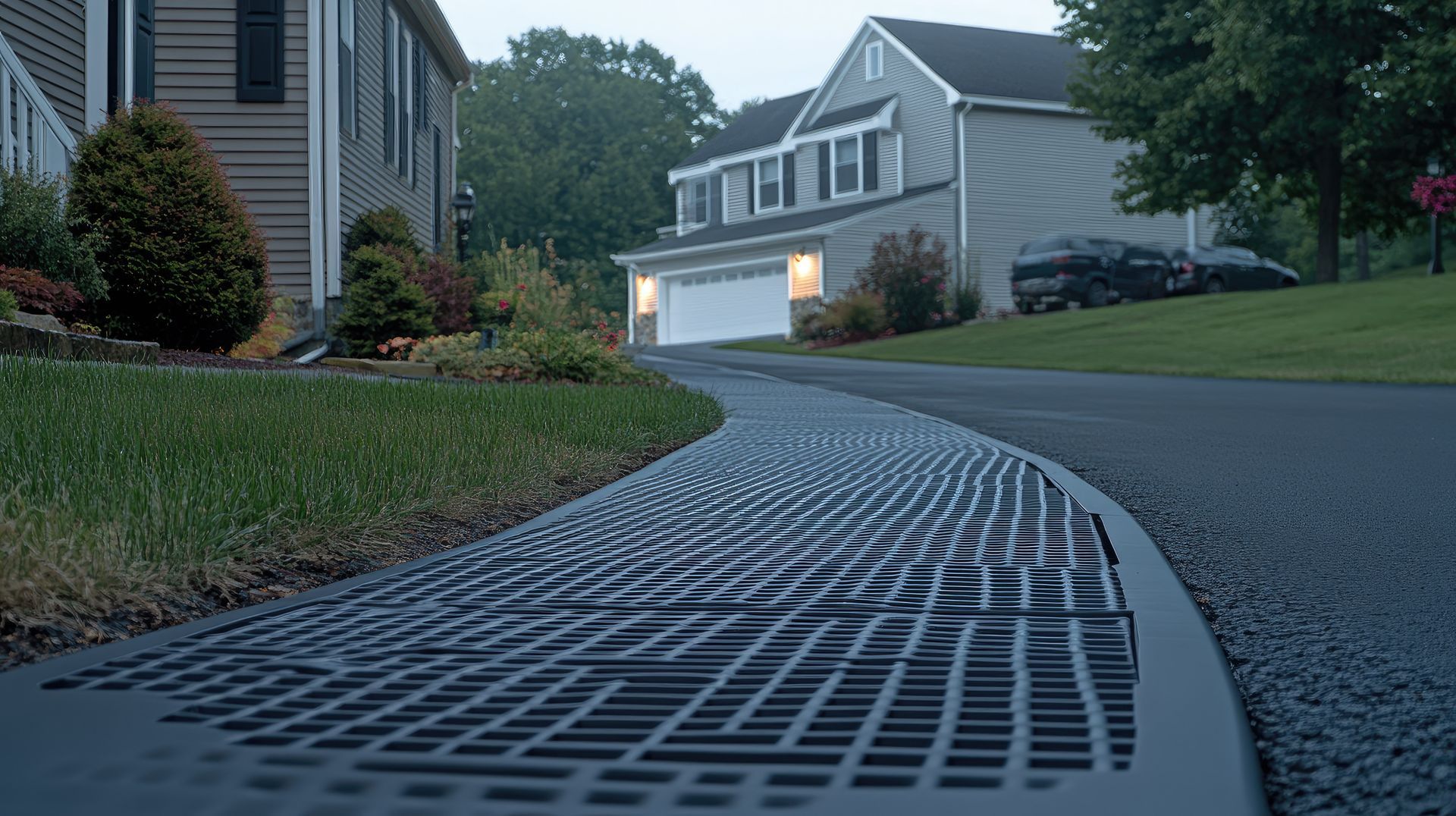
- Redirecting downspouts
- Improving grading
- Repairing low spots
- Clearing drainage pathways
- Adjusting irrigation systems before winter
Proper water management plays a major role in preserving long-term driveway stability and reducing winter damage risks.
Frequently Asked Questions About Winter Concrete Driveway Maintenance
Why do freeze-thaw cycles damage concrete?
Water entering cracks or porous areas freezes and expands, creating pressure that may gradually contribute to cracking and surface deterioration.
Should cracks be repaired before winter?
Yes. Repairing cracks early helps reduce moisture intrusion and freeze-thaw expansion damage during colder months.
Can snow and ice damage concrete driveways?
Yes. Moisture exposure, freeze-thaw cycles, and improper deicing practices may all contribute to winter concrete deterioration.
Are deicing chemicals harmful to concrete?
Some harsh deicers may accelerate scaling or surface wear, especially on older or improperly sealed driveways.
How can homeowners protect concrete driveways during winter?
Regular snow removal, drainage management, sealing, crack repair, and proper deicer use all help reduce winter damage risks.
For homeowners throughout Castle Rock and surrounding Colorado communities, winter driveway maintenance is one of the most important steps in protecting concrete surfaces from freeze-thaw damage, cracking, and long-term deterioration. Addressing small issues before and during winter can help preserve both structural integrity and curb appeal while reducing costly repairs later.
Creteworx provides professional concrete driveway installation, repair, sealing, and maintenance services designed specifically for Colorado’s demanding winter climate conditions. By combining experienced craftsmanship, preventative maintenance strategies, and long-term drainage solutions, homeowners can better protect their driveways from snow, ice, and seasonal moisture damage year after year.